publications
publications by categories in reversed chronological order.
2026
- ACM MM 2026
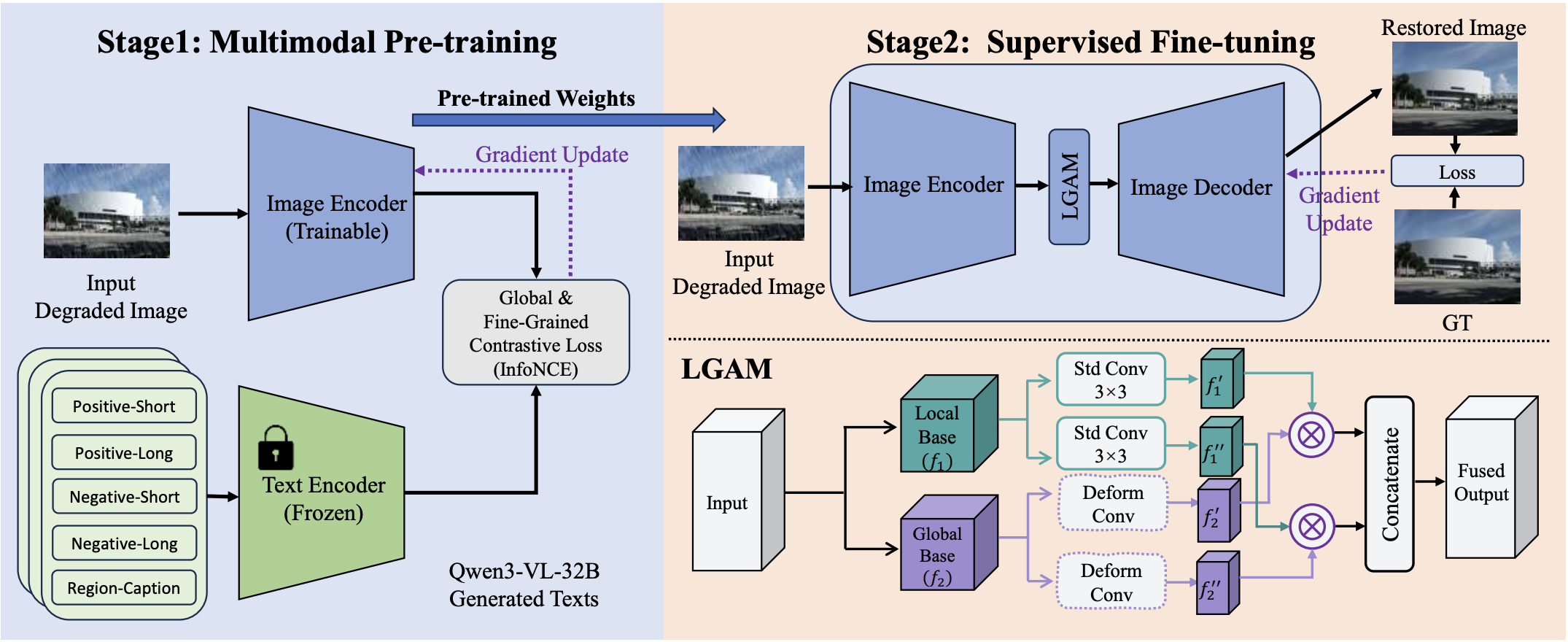 SIGMA: Semantic-Informed Grounded Multimodal Alignment for Image RestorationHaoran Yin, Chenyu Zhou, and Yuhua JinIn Proceedings of the 34th ACM International Conference on Multimedia, 2026
Image restoration aims to recover clean, high-fidelity images from degraded inputs. However, existing vision-only methods lack explicit semantic context, often struggling to distinguish degradation artifacts from intrinsic image textures. While recent multimodal approaches introduce language guidance, they typically rely on coarse holistic descriptions and positive-only supervision, which limits fine-grained semantic alignment under severe degradations. To overcome these limitations, we introduce the Unified Multimodal Restoration 1-Million (UMR-1M) dataset, a large-scale multimodal dataset tailored for low-level image restoration. UMR-1M goes beyond standard positive captions by incorporating hallucinated hard negatives and fine-grained region grounding, enabling more discriminative cross-modal alignment. Built on this foundation, we propose Language-Guided Restoration Alignment Pre-training (LG-RAP), which distills grounded multimodal priors into the visual backbone. Furthermore, we present Semantic-Informed Grounded Multimodal Alignment (SIGMA), a CNN-ViT hybrid restoration framework built upon this alignment paradigm for high-fidelity pixel-wise reconstruction. Extensive experiments on deraining, desnowing, denoising, and deblurring benchmarks demonstrate that SIGMA achieves competitive performance across multiple restoration tasks.
Formatted citationYin, H., Zhou, C., and Jin, Y. SIGMA: Semantic-Informed Grounded Multimodal Alignment for Image Restoration. In Proceedings of the 34th ACM International Conference on Multimedia (MM '26), 2026.
BibTeX@inproceedings{yin2026sigma, title={{SIGMA}: Semantic-Informed Grounded Multimodal Alignment for Image Restoration}, author={Haoran Yin and Chenyu Zhou and Yuhua Jin}, booktitle={Proceedings of the 34th ACM International Conference on Multimedia}, series={MM '26}, year={2026}, publisher={ACM} } - Preprint
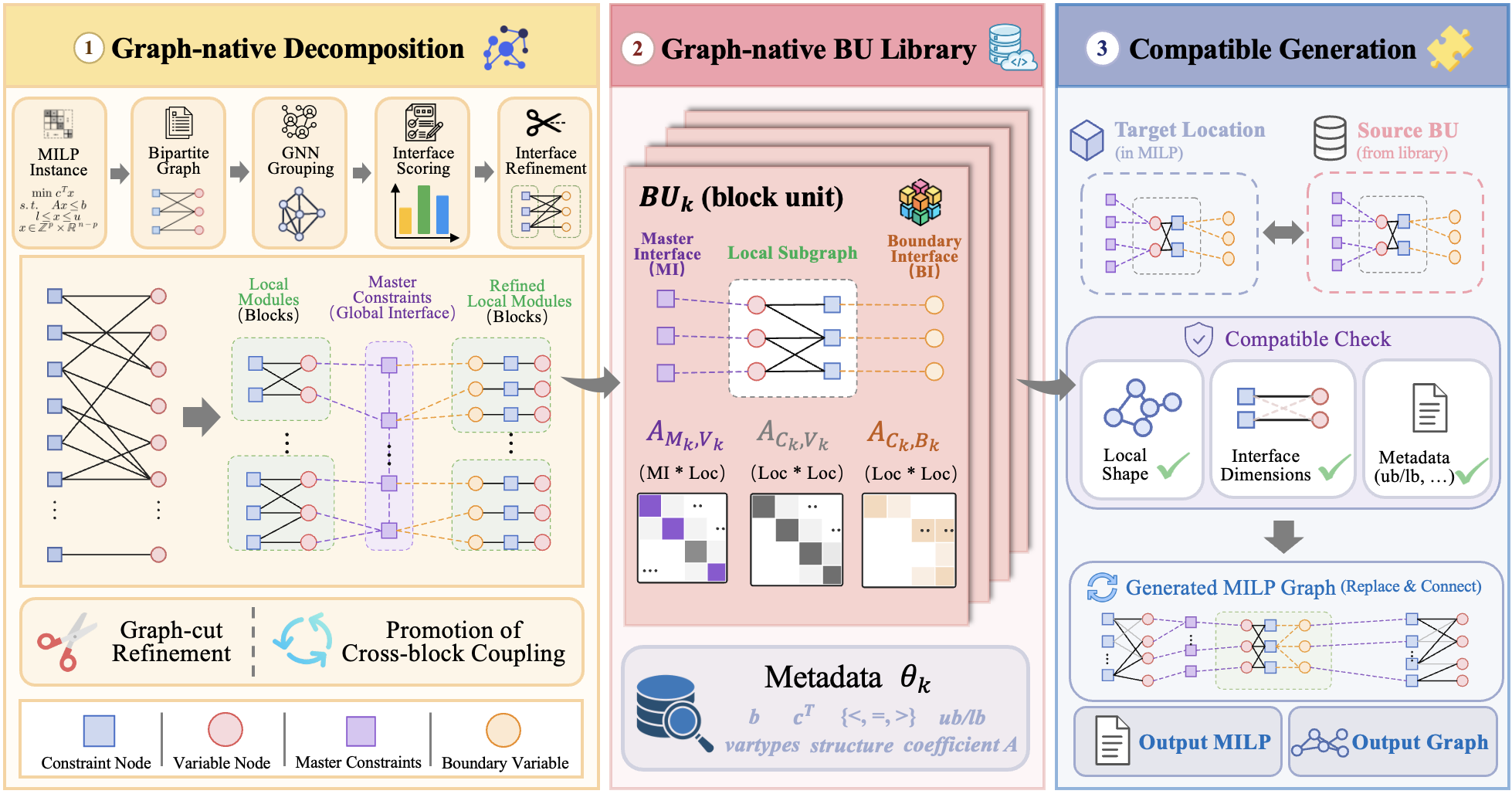 GraphBU: MILP Instance Generation with Graph-Native Block UnitsXiaolei Guo, Chenyu Zhou, Jianghao Lin, and Dongdong GearXiv preprint arXiv:2607.06532, 2026
Mixed-integer linear programming (MILP) instances used for solver development are hard to obtain when models come from private or application-specific pipelines. A generator must keep the structure that solvers and learned policies rely on. Existing general generators usually choose their generation unit from a formulation template, summary statistics, local graph edits, or blocks found after recombination. These units do not explicitly record how a local part of the MILP is coupled to the rest of the instance. We propose GraphBU, a graph-native generator whose basic unit is a local subproblem plus its interface. The method promotes coupling nodes into master constraints or boundary variables and uses the resulting block units for compatibility-checked replacement. The analysis focuses on the properties needed by this construction: promotion separates interfaces, replacement can preserve feasibility under an interface-slack condition, and the graph construction is invariant to row-column permutations. On MILP instances generation, this unit keeps graph statistics close to the source family, preserves feasibility on most datasets, and improves downstream Predict-and-Search training. Generated by GraphBU, the average graph-statistical similarity was approximately 0.934, the average feasibility was approximately 96.7%, and the average increase in the main index of downstream PS was approximately 8.0%.
Formatted citationGuo, X., Zhou, C., Lin, J., and Ge, D. GraphBU: MILP Instance Generation with Graph-Native Block Units. arXiv preprint arXiv:2607.06532, 2026.
BibTeX@misc{guo2026graphbumilpinstancegeneration, title={GraphBU: MILP Instance Generation with Graph-Native Block Units}, author={Xiaolei Guo and Chenyu Zhou and Jianghao Lin and Dongdong Ge}, year={2026}, eprint={2607.06532}, archivePrefix={arXiv}, primaryClass={cs.LG}, url={https://arxiv.org/abs/2607.06532} } - Preprint
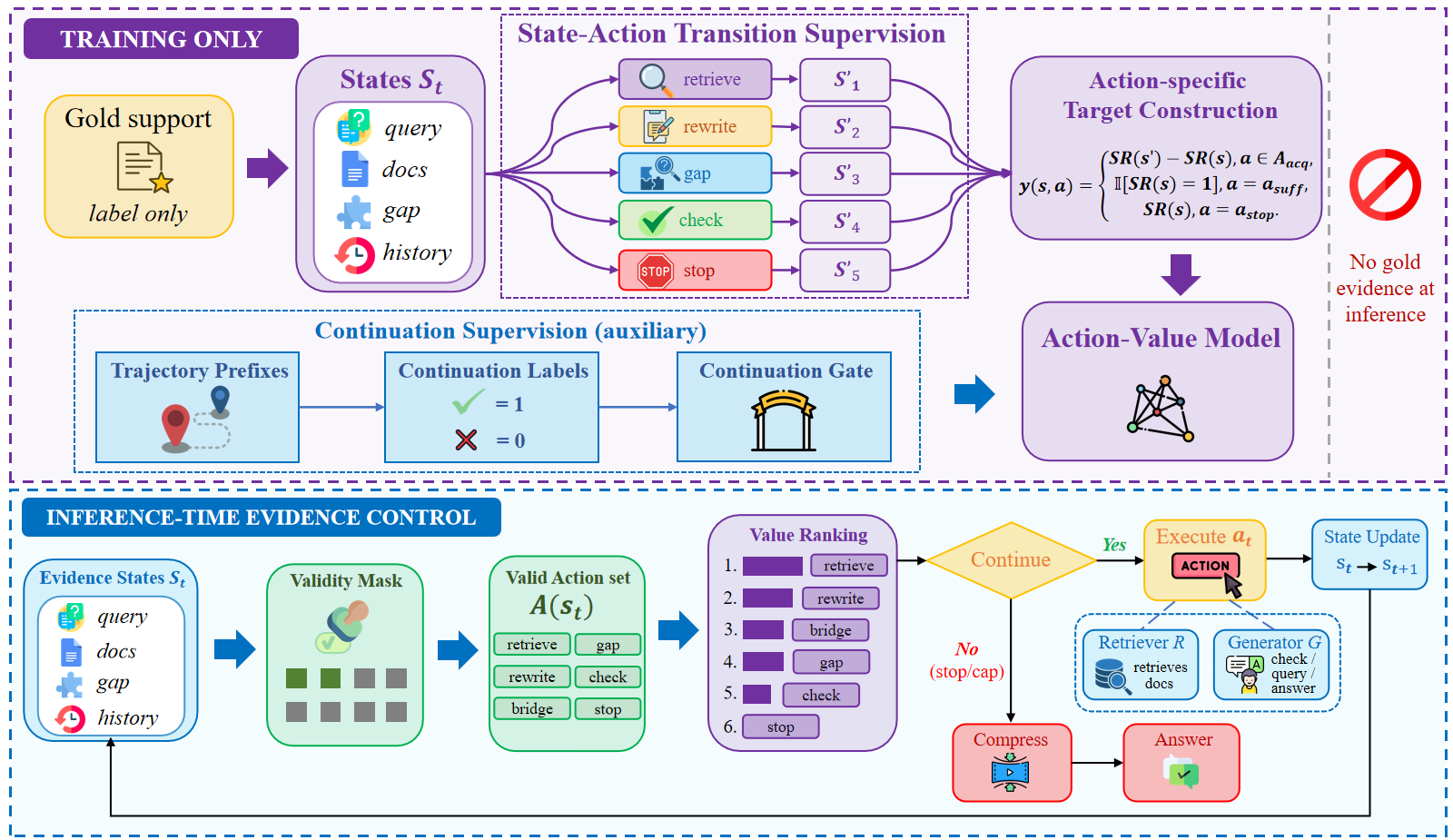 DynaKRAG: A Unified Framework for Learnable Evidence Control in Multi-Hop Retrieval-Augmented GenerationYaqi Wu, Xiaolei Guo, Chenyu Zhou, Jiaqi Huang, Xianfa Zhang, Junxu Zhang, Zhuo Yu, Zhubo Shi, Jianghao Lin, and Dongdong GearXiv preprint arXiv:2607.06507, 2026
Multi-hop retrieval-augmented generation (RAG) acquires evidence sequentially, with each new document potentially revealing missing facts, bridge entities, query defects, or sufficient support for answering. Existing methods provide useful operations such as iterative retrieval, query reformulation, evidence critique, and sufficiency judging, but typically organize them within method-specific pipelines or predefined control topologies. This leaves underexplored how to learn a shared state-conditioned policy that chooses among currently valid evidence operations. We introduce DynaKRAG, which formulates multi-hop evidence acquisition as state-conditioned control over atomic evidence operations. At each step, a validity layer constructs the executable action set, and a learned controller selects the next operation. The resulting transition updates the evidence state and may enable new operations at subsequent steps. With Qwen2.5-7B-Instruct, DynaKRAG achieves F1 scores of 0.5998 on HotpotQA, 0.5340 on 2Wiki, and 0.3061 on MuSiQue, outperforming the strongest controlled baseline on all three benchmarks. Replacing the learned controller with a uniform-valid policy reduces F1 by 3.96–5.78 points, while removing sufficiency feedback hurts all three datasets. Controlled retrieval-cap experiments further show that additional retrieval is not uniformly beneficial. Together, these results demonstrate the benefit of coordinating retrieval, diagnosis, and gap-directed acquisition under an evolving evidence state.
Formatted citationWu, Y., Guo, X., Zhou, C., Huang, J., Zhang, X., Zhang, J., Yu, Z., Shi, Z., Lin, J., and Ge, D. DynaKRAG: A Unified Framework for Learnable Evidence Control in Multi-Hop Retrieval-Augmented Generation. arXiv preprint arXiv:2607.06507, 2026.
BibTeX@misc{wu2026dynakragunifiedframeworklearnable, title={DynaKRAG: A Unified Framework for Learnable Evidence Control in Multi-Hop Retrieval-Augmented Generation}, author={Yaqi Wu and Xiaolei Guo and Chenyu Zhou and Jiaqi Huang and Xianfa Zhang and Junxu Zhang and Zhuo Yu and Zhubo Shi and Jianghao Lin and Dongdong Ge}, year={2026}, eprint={2607.06507}, archivePrefix={arXiv}, primaryClass={cs.CL}, url={https://arxiv.org/abs/2607.06507} } - IEEE TCSS
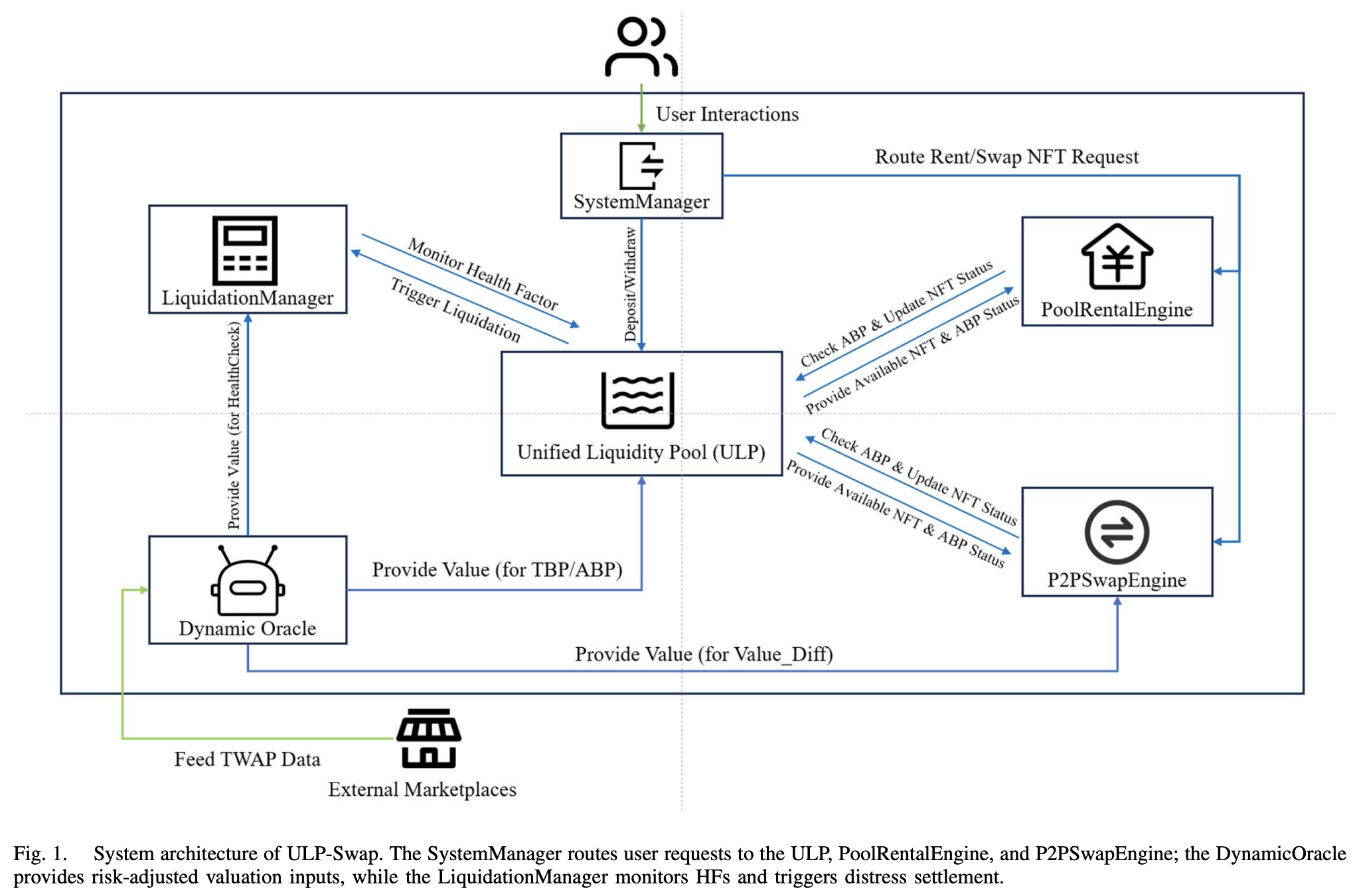 ULP-Swap: A Unified Liquidity Pool for Financial Reuse of Gaming NFTs via Pool Rentals and ABP-Secured SwapsHaoran Yin, Jiaxiang Sun, Rong Zhao, Chenyu Zhou, and Yuhua JinIEEE Transactions on Computational Social Systems, 2026Formatted citation
Yin, H., Sun, J., Zhao, R., Zhou, C., and Jin, Y. ULP-Swap: A Unified Liquidity Pool for Financial Reuse of Gaming NFTs via Pool Rentals and ABP-Secured Swaps. IEEE Transactions on Computational Social Systems, 2026. DOI: 10.1109/TCSS.2026.3708983.
BibTeX@article{yin2026ulpswap, title={ULP-Swap: A Unified Liquidity Pool for Financial Reuse of Gaming NFTs via Pool Rentals and ABP-Secured Swaps}, author={Haoran Yin and Jiaxiang Sun and Rong Zhao and Chenyu Zhou and Yuhua Jin}, journal={IEEE Transactions on Computational Social Systems}, year={2026}, publisher={Institute of Electrical and Electronics Engineers (IEEE)}, doi={10.1109/TCSS.2026.3708983}, url={https://ieeexplore.ieee.org/document/11609341/} } - Preprint
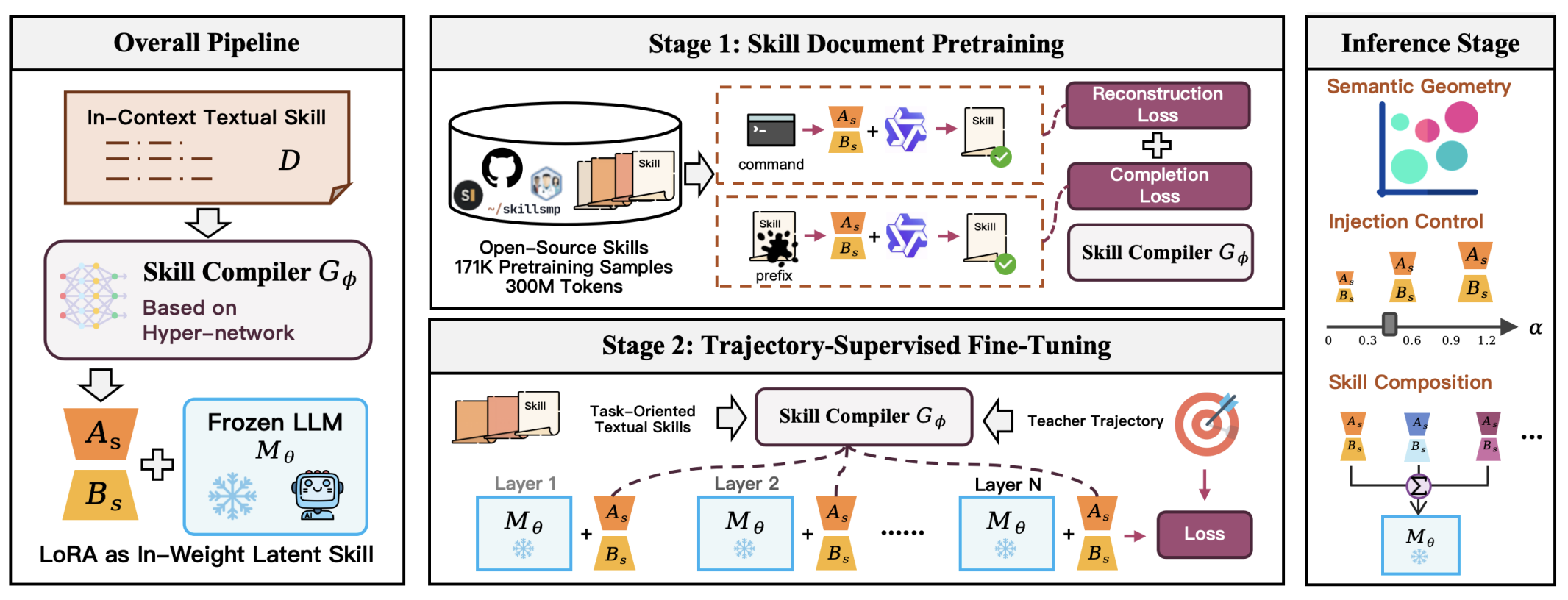 LatentSkill: From In-Context Textual Skills to In-Weight Latent Skills for LLM AgentsAofan Yu, Chenyu Zhou, Tianyi Xu, Zihan Guo, Rong Shan, Zhihui Fu, Jun Wang, Weiwen Liu, Yong Yu, Weinan Zhang, and Jianghao LinarXiv preprint arXiv:2606.06087, 2026
Agent systems increasingly use textual skills to encode reusable task procedures, but injecting these skills into the prompt at every step incurs substantial context overhead and exposes skill content as plaintext. We present LatentSkill, a framework that converts textual skills into plug-and-play LoRA adapters through a pretrained hypernetwork. LatentSkill stores skill knowledge in weight space rather than context space, removing per-step skill tokens while preserving modular loading, scaling, and composition. On ALFWorld and Search-QA, LatentSkill outperforms the corresponding in-context skill baseline while using substantially fewer prefill tokens: it improves ALFWorld success by 21.4 and 13.4 points on the seen and unseen splits with 64.1% fewer prefill tokens, and improves Search-QA exact match by 3.0 points with 72.2% lower skill-token overhead. Further analysis shows that generated skill LoRAs form a structured semantic geometry, can be precisely controlled via the LoRA scaling coefficient, and can be composed through parameter-space arithmetic when skill components are aligned. These findings suggest that weight-space skills provide an efficient, modular, and less exposed substrate for extending LLM agents.
BibTeX@article{YuLatentSkill2026, title = {LatentSkill: From In-Context Textual Skills to In-Weight Latent Skills for LLM Agents}, author = {Yu, Aofan and Zhou, Chenyu and Xu, Tianyi and Guo, Zihan and Shan, Rong and Fu, Zhihui and Wang, Jun and Liu, Weiwen and Yu, Yong and Zhang, Weinan and Lin, Jianghao}, journal = {arXiv preprint arXiv:2606.06087}, year = {2026}, } - Preprint
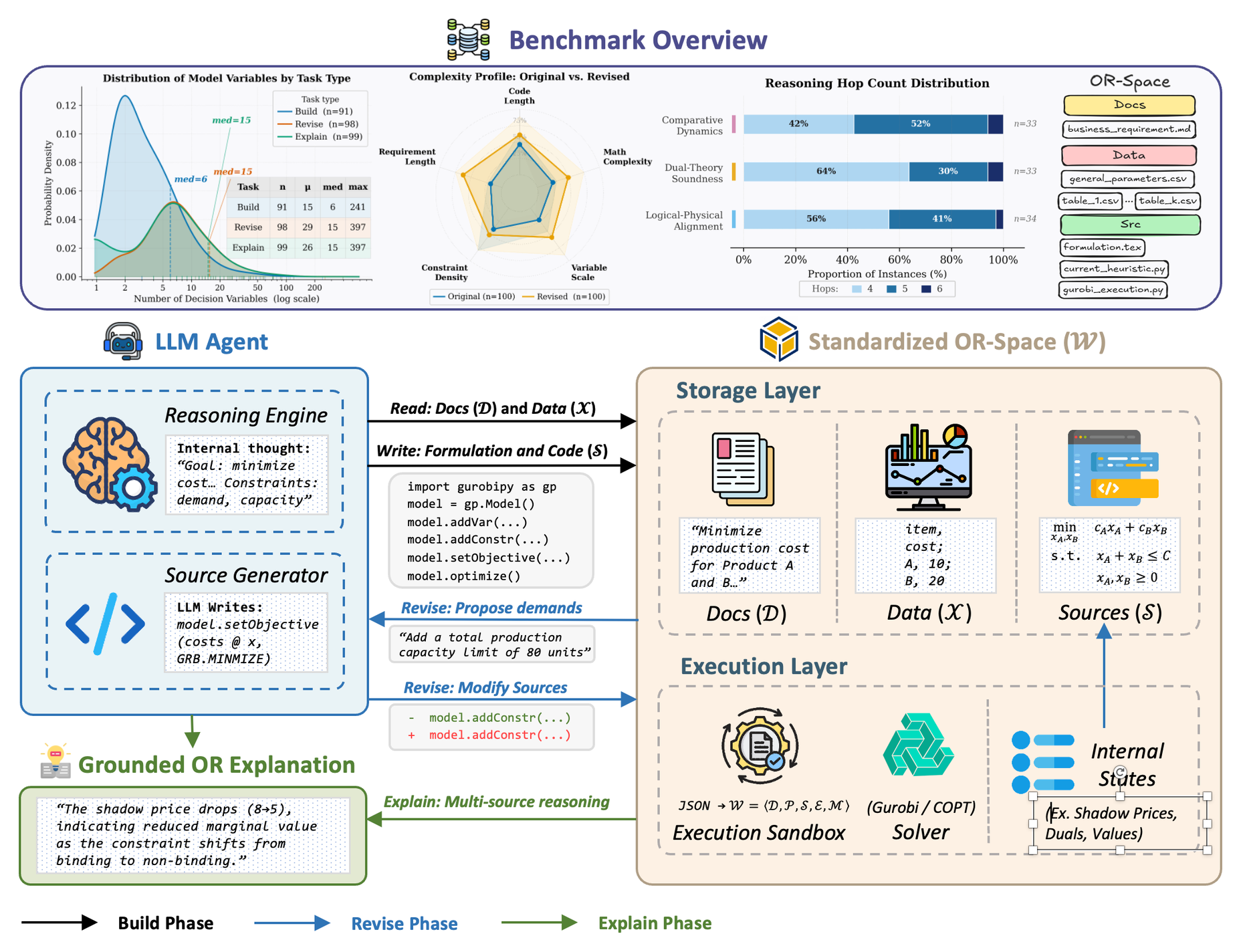 OR-Space: A Full-Lifecycle Workspace Benchmark for Industrial Optimization AgentsarXiv preprint arXiv:2605.28158, 2026
Large language model agents are increasingly used to assist with operations research modeling, yet existing OR-oriented benchmarks often reduce evaluation to one-shot translation from a self-contained textual problem statement into a mathematical formulation or solver program. OR-Space is a full-lifecycle workspace benchmark for evaluating industrial optimization agents across model construction, model revision, and grounded explanation. Each instance is represented as a persistent executable workspace containing business documents, structured data, optional code artifacts, solver outputs, and task-specific evaluators distributed across multiple interdependent files. By combining persistent multi-artifact workspaces with lifecycle-oriented task modes, OR-Space evaluates whether agents can perform reliable optimization work beyond end-to-end text generation.
BibTeX@article{ChenyuORSpace2026, title = {OR-Space: A Full-Lifecycle Workspace Benchmark for Industrial Optimization Agents}, author = {Zhou, Chenyu and Lu, Xinyun and Zhao, Jiangyue and Lin, Jianghao and Ge, Dongdong and Ye, Yinyu}, journal = {arXiv preprint arXiv:2605.28158}, year = {2026}, } - Preprint
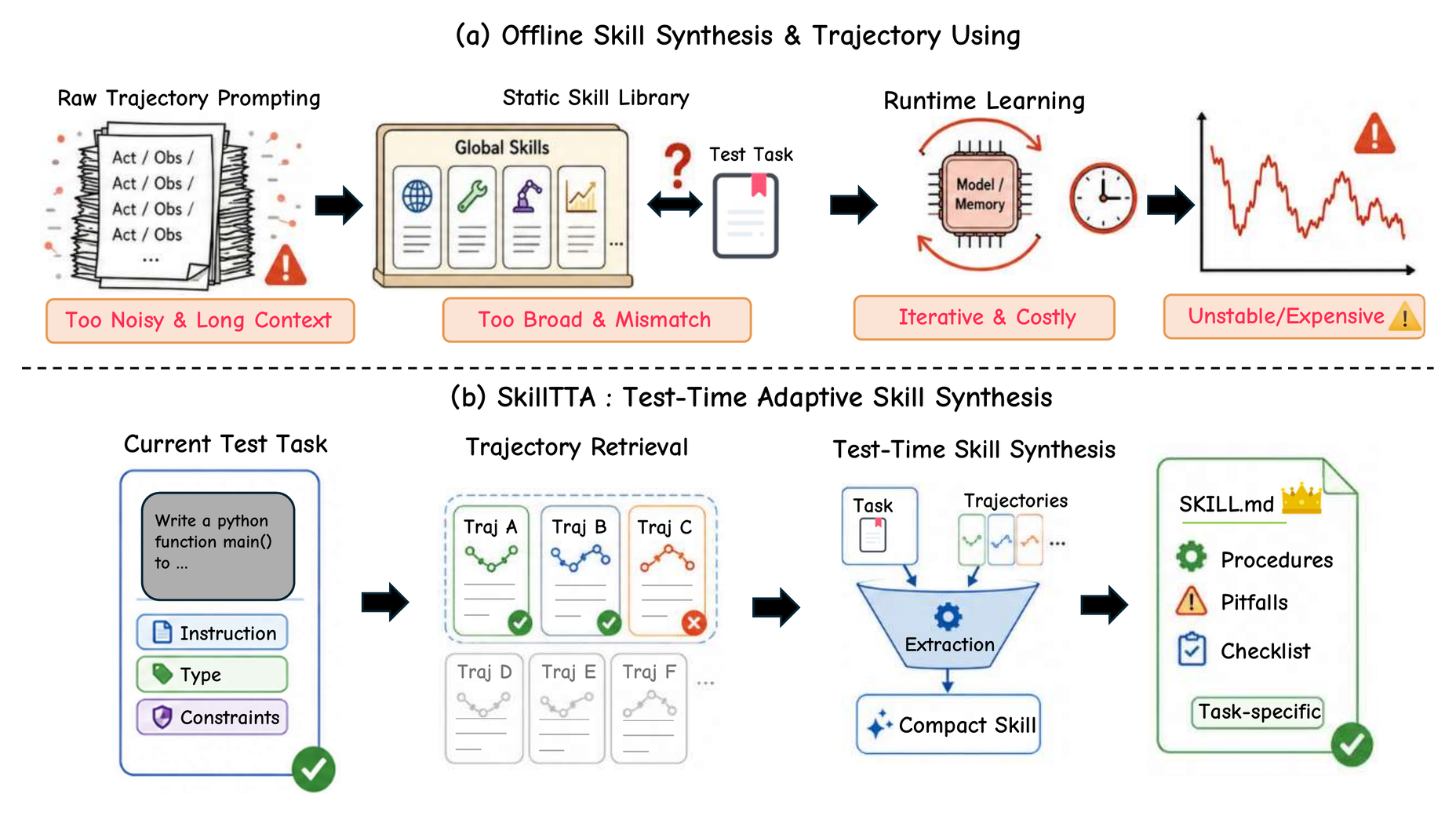 Skills on the Fly: Test-Time Adaptive Skill Synthesis for LLM AgentsarXiv preprint arXiv:2605.16986, 2026
LLM agents benefit from reusable skills, yet test-time tasks often require guidance more specific than a static skill library can provide. We propose SkillTTA, a Test-Time Adaptive Skill Synthesis method that retrieves a small set of training trajectories relevant to the current task and synthesizes them into a temporary, task-specific textual skill. The solver model is kept fixed, so adaptation happens entirely through generated context rather than parameter updates. We evaluate the method on SpreadsheetBench, ALFWorld, and BigCodeBench. Compared with static trajectory-to-skill synthesis using GPT-5.5, task-specific skills improve SpreadsheetBench Pass@1 from 0.397 to 0.505 and BigCodeBench Pass@1 from 0.517 to 0.651. On ALFWorld, the method matches a heavier memory-learning baseline within four points of success rate while producing the shortest successful trajectories among reported methods. Ablations on SpreadsheetBench further show that synthesized skills outperform raw trajectory prompting, that top-k retrieval should stay small, and that failed trajectories are especially useful because they expose recurring evaluator-facing mistakes.
BibTeX@article{WangSkillTTA2026, title = {Skills on the Fly: Test-Time Adaptive Skill Synthesis for LLM Agents}, author = {Wang, Jingxing and Zhou, Chenyu and Fu, Zhihui and Wang, Jun and Liu, Weiwen and Zhang, Weinan and Lin, Jianghao}, journal = {arXiv preprint arXiv:2605.16986}, year = {2026}, } - Preprint
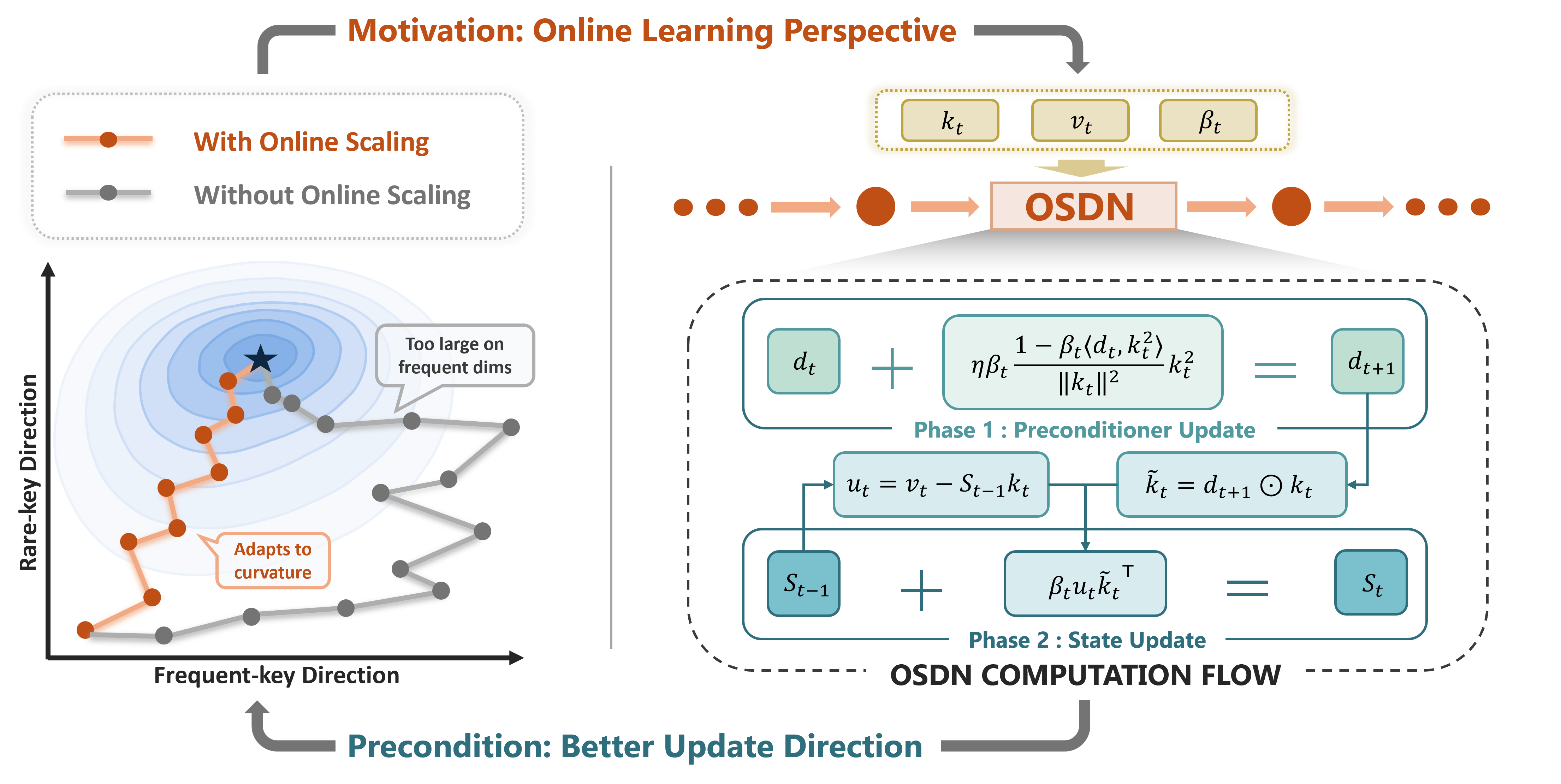 OSDN: Improving Delta Rule with Provable Online Preconditioning in Linear AttentionarXiv preprint arXiv:2605.13473, 2026
Linear attention and state-space models offer constant-memory alternatives to softmax attention, but often struggle with in-context associative recall. The Delta Rule mitigates this by writing each token via one step of online gradient descent. However, its step size relies on a single scalar gate that ignores the feature-wise curvature of the inner objective. We propose Online Scaled DeltaNet (OSDN), which augments the scalar gate with a diagonal preconditioner updated online via hypergradient feedback. Crucially, this right-preconditioning is algebraically equivalent to a per-feature scaling of the write-side key. This equivalence allows OSDN to strictly preserve the hardware-friendly chunkwise parallel pipeline of DeltaNet without incurring high-dimensional state overhead. Theoretically, by exploiting the exact-quadratic structure of the inner regression loss, we establish super-geometric convergence against a right-Newton comparator and prove an algorithm-aligned token-local residual contraction bound. To handle non-stationary contexts, we further introduce Adaptive Preconditioner Forgetting (APF) to dynamically refresh stale calibration. Empirically, OSDN demonstrates strong performance across scales. At the 340M-parameter scale, OSDN improves JRT-style in-context recall by 32% over DeltaNet. Scaling to 1.3B parameters, it achieves a 39% reduction in the recall residual ratio while maintaining parity on general downstream tasks, demonstrating that our online-preconditioning mechanism effectively transfers and amplifies at the billion-parameter scale.
Formatted citationZhou, C., Li, H., Liu, Y., Lin, J., Ge, D., and Ye, Y. OSDN: Improving Delta Rule with Provable Online Preconditioning in Linear Attention. arXiv preprint arXiv:2605.13473, 2026.
BibTeX@misc{zhou2026osdnimprovingdeltarule, title={OSDN: Improving Delta Rule with Provable Online Preconditioning in Linear Attention}, author={Chenyu Zhou and Hongpei Li and Yuerou Liu and Jianghao Lin and Dongdong Ge and Yinyu Ye}, year={2026}, eprint={2605.13473}, archivePrefix={arXiv}, primaryClass={cs.LG}, url={https://arxiv.org/abs/2605.13473} } - Preprint
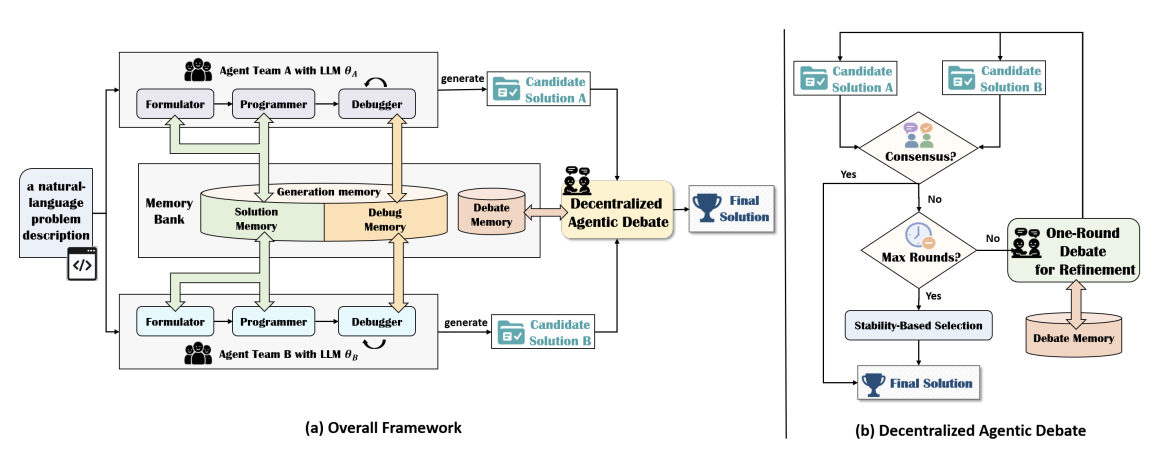 From Soliloquy to Agora: Memory-Enhanced LLM Agents with Decentralized Debate for Optimization ModelingSubmitted to Operations Research, 2026
Optimization modeling underpins real-world decision-making in logistics, manufacturing, energy, and public services, but reliably solving such problems from natural-language requirements remains challenging for current large language models (LLMs). In this paper, we propose Agora-Opt, a modular agentic framework for optimization modeling that combines decentralized debate with a read-write memory bank. Agora-Opt allows multiple agent teams to independently produce end-to-end solutions and reconcile them through an outcome-grounded debate protocol, while memory stores solver-verified artifacts and past disagreement resolutions to support training-free improvement over time. This design is flexible across both backbones and methods: it reduces base-model lock-in, transfers across different LLM families, and can be layered onto existing pipelines with minimal coupling. Across public benchmarks, Agora-Opt achieves the strongest overall performance among all compared methods, outperforming strong zero-shot LLMs, training-centric approaches, and prior agentic baselines. Further analyses show robust gains across backbone choices and component variants, and demonstrate that decentralized debate offers a structural advantage over centralized selection by enabling agents to refine candidate solutions through interaction and even recover correct formulations when all initial candidates are flawed. These results suggest that reliable optimization modeling benefits from combining collaborative cross-checking with reusable experience, and position Agora-Opt as a practical and extensible foundation for trustworthy optimization modeling assistance.
Formatted citationLin, J., Ling, Z., Zhou, C., Xu, T., Jiang, R., Wang, Z., and Ge, D. From Soliloquy to Agora: Memory-Enhanced LLM Agents with Decentralized Debate for Optimization Modeling. arXiv preprint arXiv:2604.25847, 2026.
BibTeX@misc{lin2026soliloquyagoramemoryenhancedllm, title={From Soliloquy to Agora: Memory-Enhanced LLM Agents with Decentralized Debate for Optimization Modeling}, author={Jianghao Lin and Zi Ling and Chenyu Zhou and Tianyi Xu and Ruoqing Jiang and Zizhuo Wang and Dongdong Ge}, year={2026}, eprint={2604.25847}, archivePrefix={arXiv}, primaryClass={math.OC}, url={https://arxiv.org/abs/2604.25847} } - Preprint
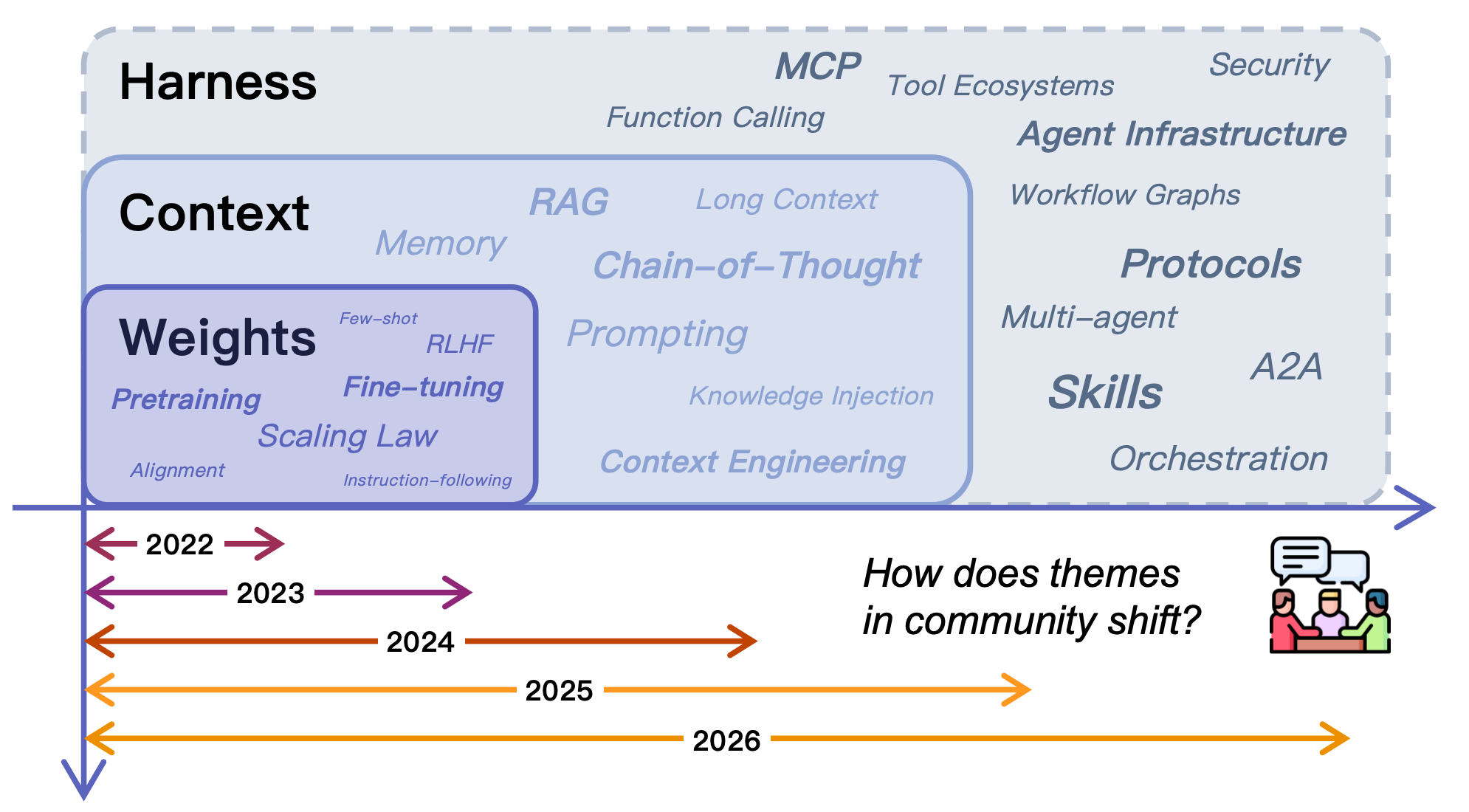 Externalization in LLM Agents: A Unified Review of Memory, Skills, Protocols and Harness EngineeringChenyu Zhou, Huacan Chai, Wenteng Chen, Zihan Guo, Rong Shan, Yuanyi Song, Tianyi Xu, Yingxuan Yang, Aofan Yu, Weiming Zhang, Congming Zheng, Jiachen Zhu, Zeyu Zheng, Zhuosheng Zhang, Xingyu Lou, Changwang Zhang, Zhihui Fu, Jun Wang, Weiwen Liu, Jianghao Lin, and Weinan ZhangarXiv preprint arXiv:2604.08224, 2026
LLM agent development increasingly relies on reorganizing runtime infrastructure rather than modifying model weights. We present a framework analyzing four externalization dimensions: memory stores persist state over time, skills encapsulate procedural knowledge, protocols structure interactions, and harness engineering coordinates these elements into reliable execution. We trace progress from weights to context to harness design, examining trade-offs between parametric and externalized capabilities while discussing evaluation challenges and the co-evolution of models with external infrastructure.
Formatted citationZhou, C., Chai, H., Chen, W., Guo, Z., Shan, R., Song, Y., Xu, T., Yang, Y., Yu, A., Zhang, W., Zheng, C., Zhu, J., Zheng, Z., Zhang, Z., Lou, X., Zhang, C., Fu, Z., Wang, J., Liu, W., Lin, J., and Zhang, W. Externalization in LLM Agents: A Unified Review of Memory, Skills, Protocols and Harness Engineering. arXiv preprint arXiv:2604.08224, 2026.
BibTeX@misc{zhou2026externalizationllmagentsunified, title={Externalization in LLM Agents: A Unified Review of Memory, Skills, Protocols and Harness Engineering}, author={Chenyu Zhou and Huacan Chai and Wenteng Chen and Zihan Guo and Rong Shan and Yuanyi Song and Tianyi Xu and Yingxuan Yang and Aofan Yu and Weiming Zhang and Congming Zheng and Jiachen Zhu and Zeyu Zheng and Zhuosheng Zhang and Xingyu Lou and Changwang Zhang and Zhihui Fu and Jun Wang and Weiwen Liu and Jianghao Lin and Weinan Zhang}, year={2026}, eprint={2604.08224}, archivePrefix={arXiv}, primaryClass={cs.SE}, url={https://arxiv.org/abs/2604.08224} } - ICLR 2026
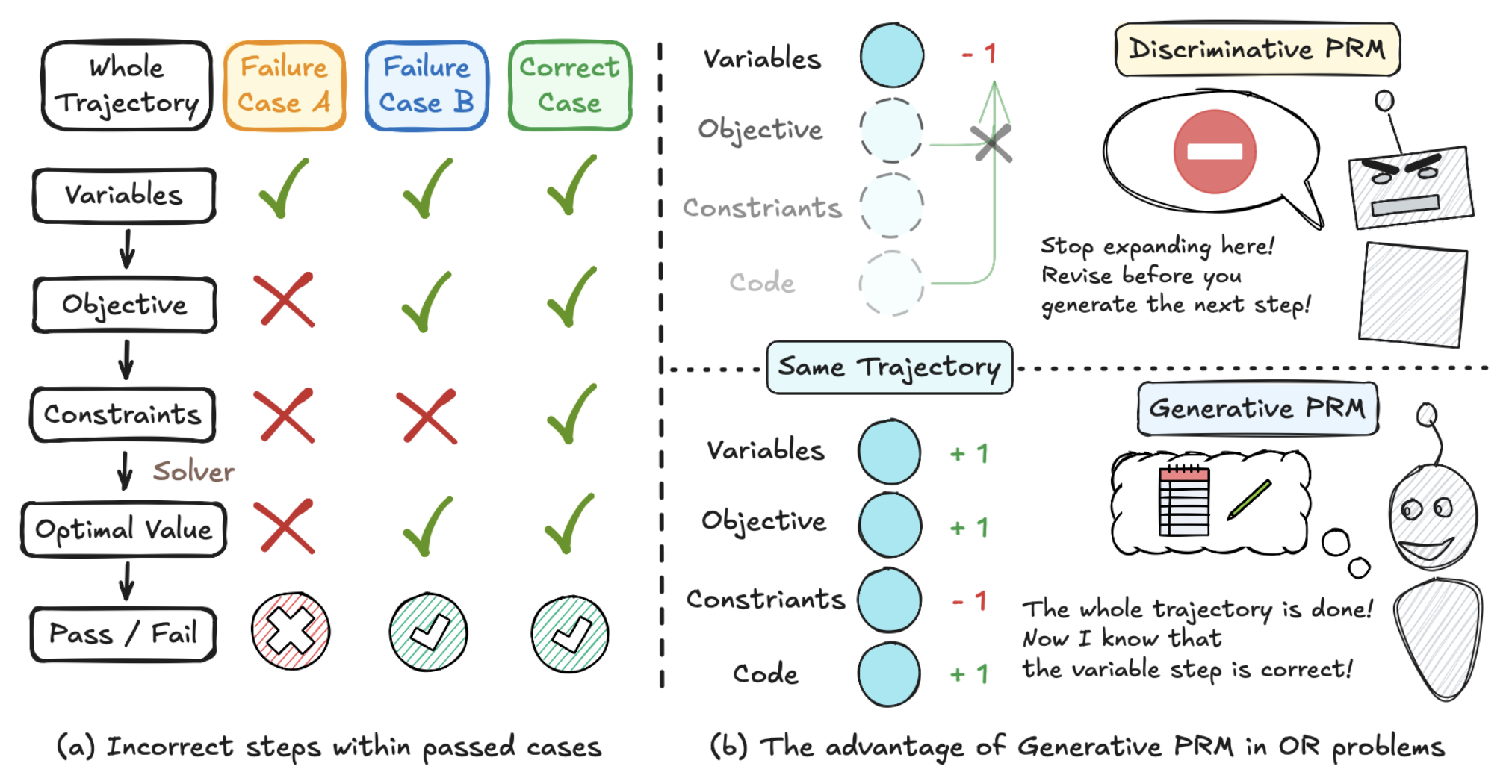 StepORLM: A Self-Evolving Framework With Generative Process Supervision For Operations Research Language ModelsChenyu Zhou, Tianyi Xu, Jianghao Lin, and Dongdong GeThe Fourteenth International Conference on Learning Representations, 2026
Large Language Models (LLMs) have shown promising capabilities for solving Operations Research (OR) problems. While reinforcement learning serves as a powerful paradigm for LLM training on OR problems, existing works generally face two key limitations. First, outcome reward suffers from the credit assignment problem, where correct final answers can reinforce flawed reasoning. Second, conventional discriminative process supervision is myopic, failing to evaluate the interdependent steps of OR modeling holistically. To this end, we introduce StepORLM, a novel self-evolving framework with generative process supervision. At its core, StepORLM features a co-evolutionary loop where a policy model and a generative process reward model (GenPRM) iteratively improve on each other. This loop is driven by a dual-feedback mechanism: definitive, outcome-based verification from an external solver, and nuanced, holistic process evaluation from the GenPRM. The combined signal is used to align the policy via Weighted Direct Preference Optimization (W-DPO) and simultaneously refine the GenPRM. Our resulting 8B-parameter StepORLM establishes a new state-of-the-art across six benchmarks, significantly outperforming vastly larger generalist models, agentic methods, and specialized baselines. Moreover, the co-evolved GenPRM is able to act as a powerful and universally applicable process verifier, substantially boosting the inference scaling performance of both our own model and other existing LLMs.
Formatted citationZhou, C., Xu, T., Lin, J., and Ge, D. StepORLM: A Self-Evolving Framework With Generative Process Supervision For Operations Research Language Models. In The Fourteenth International Conference on Learning Representations, 2026.
BibTeX@inproceedings{zhou2026steporlm, title={Step{ORLM}: A Self-Evolving Framework With Generative Process Supervision For Operations Research Language Models}, author={Chenyu Zhou and Tianyi Xu and Jianghao Lin and Dongdong Ge}, booktitle={The Fourteenth International Conference on Learning Representations}, year={2026}, url={https://openreview.net/forum?id=ZrgxU8WMmG} }
2025
- Preprint
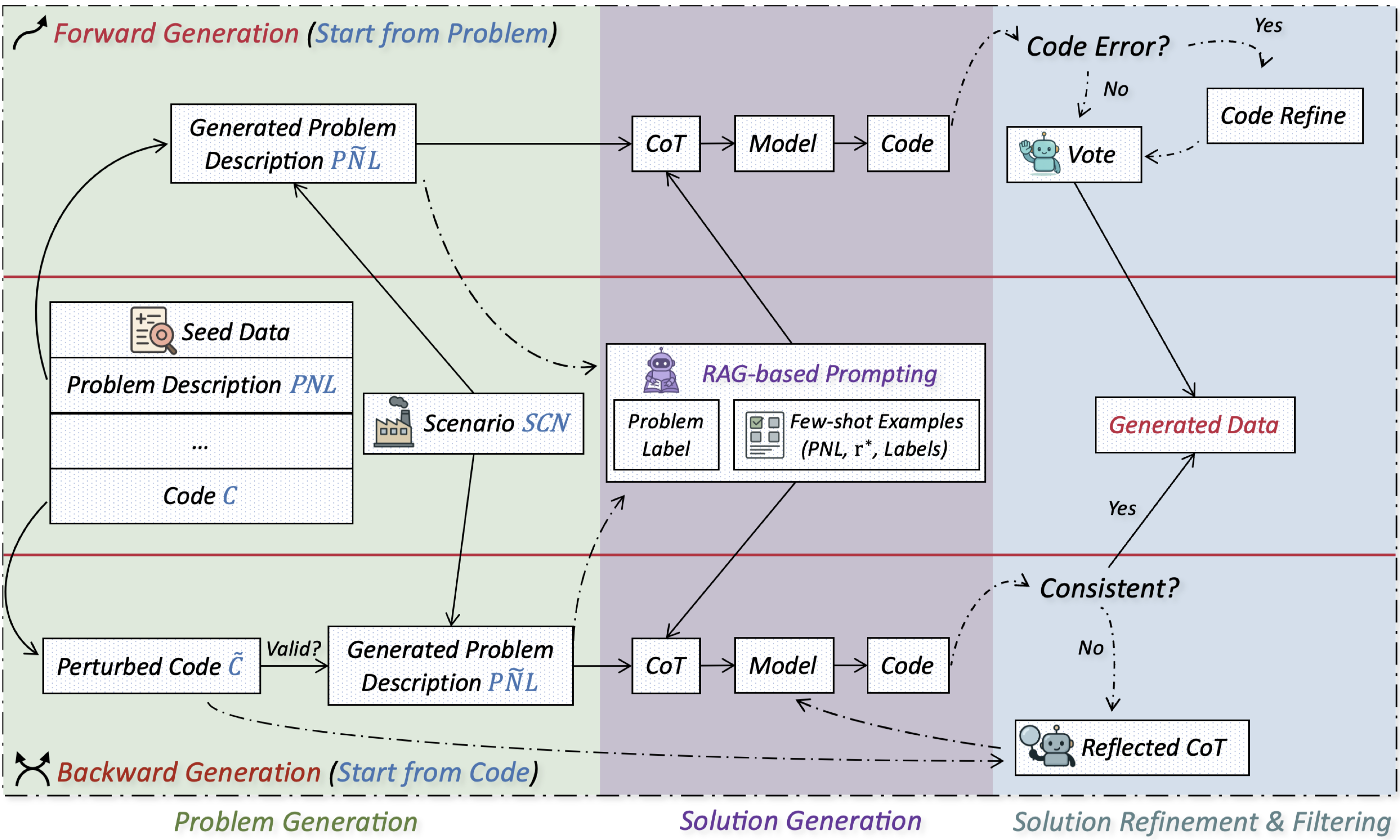 Auto-Formulating Dynamic Programming Problems with Large Language ModelsChenyu Zhou, Jingyuan Yang, Linwei Xin, Yitian Chen, Ziyan He, and Dongdong GeMajor Revision at Manufacturing & Service Operations Management, 2025
Dynamic programming (DP) is a fundamental method in operations research, but formulating DP models has traditionally required expert knowledge of both the problem context and DP techniques. Large Language Models (LLMs) offer the potential to automate this process. However, DP problems pose unique challenges due to their inherently stochastic transitions and the limited availability of training data. These factors make it difficult to directly apply existing LLM-based models or frameworks developed for other optimization problems, such as linear or integer programming. We introduce DP-Bench, the first benchmark covering a wide range of textbook-level DP problems to enable systematic evaluation. We present Dynamic Programming Language Model (DPLM), a 7B-parameter specialized model that achieves performance comparable to state-of-the-art LLMs like OpenAI’s o1 and DeepSeek-R1, and surpasses them on hard problems. Central to DPLM’s effectiveness is DualReflect, our novel synthetic data generation pipeline, designed to scale up training data from a limited set of initial examples. DualReflect combines forward generation for diversity and backward generation for reliability. Our results reveal a key insight: backward generation is favored in low-data regimes for its strong correctness guarantees, while forward generation, though lacking such guarantees, becomes increasingly valuable at scale for introducing diverse formulations. This trade-off highlights the complementary strengths of both approaches and the importance of combining them.
Formatted citationZhou, C., Yang, J., Xin, L., Chen, Y., He, Z., and Ge, D. Auto-Formulating Dynamic Programming Problems with Large Language Models. arXiv preprint arXiv:2507.11737, 2026.
BibTeX@misc{zhou2026autoformulatingdynamicprogrammingproblems, title={Auto-Formulating Dynamic Programming Problems with Large Language Models}, author={Chenyu Zhou and Jingyuan Yang and Linwei Xin and Yitian Chen and Ziyan He and Dongdong Ge}, year={2026}, eprint={2507.11737}, archivePrefix={arXiv}, primaryClass={cs.AI}, url={https://arxiv.org/abs/2507.11737} } - WebSci 2025
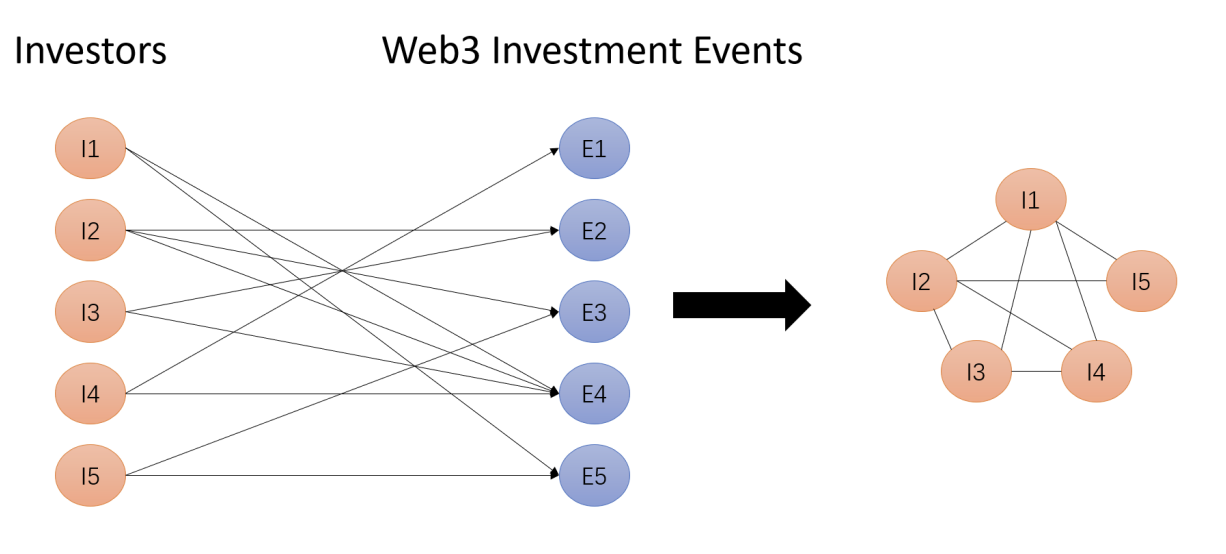 Decentralization Funded by Centralization: Understanding Crypto Joint-Investment NetworkJunyu Zhang, Chenyu Zhou, and Wei CaiIn The 17th ACM Web Science Conference, 2025
In the crypto industry, venture capital investors provide funding to drive the domain towards its decentralized vision, while many individual investors follow online investment news to aid their decision-making. By scraping investment event data from crypto data analytics websites, we construct and analyze the joint investment network of venture capital investors in the crypto industry. Our study reveals the centralized nature of the investor network in this supposedly decentralized domain, by identifying central nodes such as Coinbase Venture and disclosing their persistence of dominance, despite Coinbase’s relatively small market share as an exchange. Based on node features, we divide the network into different communities, hinting at investor clustering. To measure the robustness of this network, we simulate various attack strategies to model bankruptcy and risk propagation, confirming its vulnerability as seen in historical events. Additionally, using graph neural network approaches, we fill in unknown structural information of investors, mitigating information asymmetry in investment disclosures and achieving classification accuracy above 70% for tier ratings and over 65% for investor types. Results are validated using data from another platform, exhibiting consistency. This study sheds light on the dynamics of joint investment networks in this emerging tech domain, offering insights for both potential and existing investors.
Formatted citationZhang, J., Zhou, C., and Cai, W. Decentralization Funded by Centralization: Understanding Crypto Joint-Investment Network. In Proceedings of the 17th ACM Web Science Conference 2025 (WebSci '25), pages 86--95, 2025. DOI: 10.1145/3717867.3717897.
BibTeX@inproceedings{zhang2025decentralization, title={Decentralization Funded by Centralization: Understanding Crypto Joint-Investment Network}, author={Zhang, Junyu and Zhou, Chenyu and Cai, Wei}, booktitle={Proceedings of the 17th ACM Web Science Conference 2025}, series={WebSci '25}, pages={86--95}, year={2025}, publisher={ACM}, doi={10.1145/3717867.3717897}, url={https://doi.org/10.1145/3717867.3717897} }
2024
- CSCW 2024
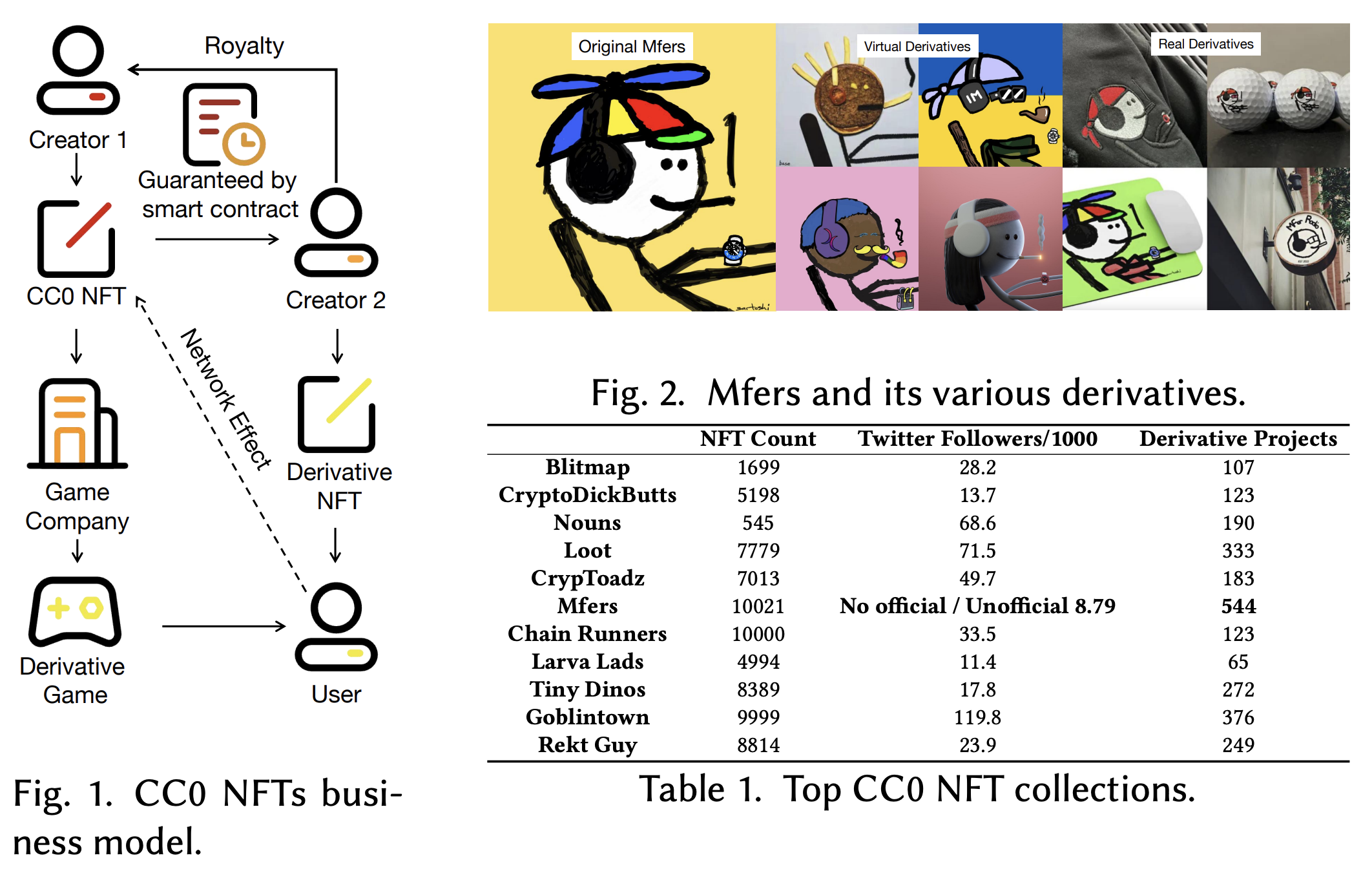 Decentralized Web3 Non-Fungible Token Community for Societal Prosperity? A Social Capital PerspectiveIn The 27th ACM SIGCHI Conference on Computer-Supported Cooperative Work & Social Computing, 2024
In the rapidly evolving Web3 world, non-fungible token (NFT) communities are reshaping the formation, distribution, and activation of social capital in ways distinct from traditional models. However, despite their growing impact on societal prosperity, a comprehensive understanding of social capital dynamics within Web3 NFT communities remains limited. This study explores the Mfers community, a key example within Web3 NFT ecosystems. By analyzing social media and blockchain data and using a Delphi method-based human-large language model (LLM) collaboration, we uncovered unique social capital patterns across six dimensions. Our findings highlight a compelling blend of decentralization, inclusion, trust, and empowerment but also raise critical questions about wealth inequality, content quality, and ethical challenges. Based on the findings, we discussed the uniqueness of social capital in Web3 NFT communities, the tension between technical and power decentralization, and the multidimensional nature of societal prosperity. We also suggested directions for future research on decentralized online communities in the CSCW field. This study provides a systematic perspective on social capital in Web3 NFT communities and introduces an innovative human-LLM collaborative analysis, offering insights into the design and governance of benign decentralized online communities.
Formatted citationChen, H., Zhou, C., El Saddik, A., and Cai, W. Decentralized Web3 Non-Fungible Token Community for Societal Prosperity? A Social Capital Perspective. Proceedings of the ACM on Human-Computer Interaction, 9(2):1--36, 2025. DOI: 10.1145/3710956.
BibTeX@article{chen2025decentralized, title={Decentralized Web3 Non-Fungible Token Community for Societal Prosperity? A Social Capital Perspective}, author={Chen, Hongzhou and Zhou, Chenyu and El Saddik, Abdulmotaleb and Cai, Wei}, journal={Proceedings of the ACM on Human-Computer Interaction}, volume={9}, number={2}, pages={1--36}, year={2025}, publisher={Association for Computing Machinery (ACM)}, doi={10.1145/3710956}, url={https://doi.org/10.1145/3710956} } - WWW 2024
 ARTEMIS: Detecting Airdrop Hunters in NFT Markets with a Graph Learning SystemChenyu Zhou, Hongzhou Chen, Hao Wu, Junyu Zhang, and Wei CaiIn The 2024 ACM Web Conference (Oral), 2024
As Web3 projects leverage airdrops to incentivize participation, airdrop hunters tactically amass wallet addresses to capitalize on token giveaways. This poses challenges to the decentralization goal. Current detection approaches tailored for cryptocurrencies overlook non-fungible tokens (NFTs) nuances. We introduce ARTEMIS, an optimized graph neural network system for identifying airdrop hunters in NFT transactions. ARTEMIS captures NFT airdrop hunters through: (1) a multimodal module extracting visual and textual insights from NFT metadata using Transformer models; (2) a tailored node aggregation function chaining NFT transaction sequences, retaining behavioral insights; (3) engineered features based on market manipulation theories detecting anomalous trading. Evaluated on decentralized exchange Blur’s data, ARTEMIS significantly outperforms baselines in pinpointing hunters. This pioneering computational solution for an emergent Web3 phenomenon has broad applicability for blockchain anomaly detection. The data and code for the paper are accessible at the following link: doi.org/10.5281/zenodo.10676801.
Formatted citationZhou, C., Chen, H., Wu, H., Zhang, J., and Cai, W. ARTEMIS: Detecting Airdrop Hunters in NFT Markets with a Graph Learning System. In Proceedings of the ACM Web Conference 2024 (WWW '24), pages 1824--1834, 2024. DOI: 10.1145/3589334.3645597.
BibTeX@inproceedings{zhou2024artemis, title={ARTEMIS: Detecting Airdrop Hunters in NFT Markets with a Graph Learning System}, author={Zhou, Chenyu and Chen, Hongzhou and Wu, Hao and Zhang, Junyu and Cai, Wei}, booktitle={Proceedings of the ACM Web Conference 2024}, series={WWW '24}, pages={1824--1834}, year={2024}, publisher={ACM}, doi={10.1145/3589334.3645597}, url={https://doi.org/10.1145/3589334.3645597} }
2023
- IEEE Wirel Commun
 Harnessing Web3 on Carbon Offset Market for Sustainability: Framework and A Case StudyIEEE Wireless Communications, 2023
Blockchain, pivotal in shaping the metaverse and Web3, often draws criticism for high energy consumption and carbon emission. The rise of sustainability-focused blockchains, especially when intersecting with innovative wireless technologies, revises this predicament. To understand blockchain’s role in sustainability, we propose a three-layers structure encapsulating four green utilities: Recording and Tracking, Wide Verification, Value Trading, and Concept Disseminating. Nori, a decentralized voluntary carbon offset project, serves as our case, illuminating these utilities. Our research unveils unique insights into the on-chain carbon market participants, affect factors of the market, value propositions of NFT-based carbon credits, and the role of social media to spread the concept of carbon offset. We argue that blockchain’s contribution to sustainability is significant, with carbon offsetting potentially evolving as a new standard within the blockchain sector.
Formatted citationZhou, C., Chen, H., Wang, S., Sun, X., El Saddik, A., and Cai, W. Harnessing Web3 on Carbon Offset Market for Sustainability: Framework and A Case Study. IEEE Wireless Communications, 30(5):104--111, 2023. DOI: 10.1109/MWC.010.2300038.
BibTeX@article{zhou2023harnessing, title={Harnessing Web3 on Carbon Offset Market for Sustainability: Framework and A Case Study}, author={Zhou, Chenyu and Chen, Hongzhou and Wang, Shiman and Sun, Xinyao and El Saddik, Abdulmotaleb and Cai, Wei}, journal={IEEE Wireless Communications}, volume={30}, number={5}, pages={104--111}, year={2023}, publisher={Institute of Electrical and Electronics Engineers (IEEE)}, doi={10.1109/MWC.010.2300038}, url={https://doi.org/10.1109/MWC.010.2300038} }